

Last updated: June 18, 2026
I rebuilt my entire SEO workflow around AI tools in 2026. The traditional approach of ranking articles on Google is now just one piece of a multi-platform distribution system.
The Search Visibility Recalibration
- 95% of AI citations now originate from content less than 10 months old - multi-trillion dollar enterprises are discovering that their historically dominant Google rankings provide zero LLM visibility, creating a bifurcated search economy where traditional authority no longer guarantees AI surface presence.
- Budget reallocation is shifting from SEO teams to brand teams - as organizations recognize that LLM optimization functions as brand awareness infrastructure rather than traffic acquisition, with competitive brand share across ChatGPT/Perplexity/Claude/Gemini replacing organic traffic as the primary KPI for search investment.
- Platform-native entity signals now compound across both traditional and AI search surfaces - a single content asset systematically repurposed into 35+ distribution points (YouTube, LinkedIn, Reddit, Quora, Instagram) generates cross-platform authority markers that Google’s entity recognition systems and LLM citation algorithms both prioritize over isolated website optimization.
Google still processes 13.7 billion daily searches versus ChatGPT’s 1 billion - yet SEO teams are confronting an existential resource allocation dilemma. While traditional optimization remains 13x larger by volume, 95% of AI citations draw exclusively from sub-10-month content, rendering historically authoritative pages algorithmically invisible to LLMs despite maintaining strong SERP positions. ■ Multi-trillion dollar organizations are now reallocating brand budgets toward LLM optimization, measuring competitor mention frequency and sentiment polarity as primary success metrics rather than backlink profiles or keyword rankings. This isn’t incremental channel diversification - it’s a fundamental reconceptualization of search visibility as brand infrastructure rather than traffic acquisition. ■ Our team has observed this tension firsthand: engineering teams push for AI-first content workflows while finance questions the ROI of abandoning proven Google rankings, and marketing struggles to justify daily publishing cadences when historical SEO playbooks recommended quarterly content audits at most.
The compounding effect reveals itself across an expanded search surface that extends far beyond Google.com. YouTube functions as the second-largest search engine globally, LinkedIn posts remain crawlable by Googlebot, Reddit results receive algorithmic prioritization in traditional SERPs, and Instagram content now surfaces in entity-based queries - yet 80% of organizations still operate under the 2020 paradigm where “SEO” meant optimizing a single website for a single search engine. ■ We’ve identified a systematic workflow gap: most content teams lack the infrastructure to convert one 2,000-word pillar article into 35+ platform-optimized distribution points (scripted video, native LinkedIn formatting, 60-second clips, Reddit answers, Quora responses) while maintaining the human-in-loop quality control that prevents AI-generated slop from degrading brand authority. The organizations winning this transition aren’t choosing between Google SEO and LLM optimization - they’re building AI command centers that automate 80-90% of repurposing workflows through sub-agents while preserving the editorial judgment, internal linking, and contrarian perspectives that both Google’s algorithm and LLM citation systems reward.
The following analysis documents the five-component architecture that our team has deployed to maintain visibility across both traditional and AI search surfaces - from the Search Everywhere Optimization framework capturing 75% more opportunity beyond Google, to the quarterly content refresh system maintaining AI citation eligibility, to the sub-agent infrastructure delivering production-grade output at scale. These aren’t theoretical best practices extracted from case studies - they represent the operational playbook we’re executing daily for clients generating hundreds of millions in organic traffic and revenue, now adapted for the 6-12 month compounding timeline required to activate rankings, citations, and brand mentions simultaneously across Google, ChatGPT, Perplexity, Claude, and Gemini.
Search Everywhere Optimization Framework: Capturing 75% More Opportunity Beyond Traditional Google SEO
Our analysis of multi-platform search dynamics reveals a strategic miscalculation costing organizations 50-75% of available market visibility. While Google processes 13.7 billion daily searches compared to ChatGPT’s 1 billion, the distribution mechanism has shifted. Traditional SEO operates as what we term a “cigar butt channel”-declining incrementally but maintaining substantial volume. The critical inflection point: 95% of AI citations reference content published within the previous 10 months, rendering legacy content with robust Google rankings functionally invisible to large language models.
We’re observing capital reallocation patterns at the enterprise level that signal structural market transformation. Multi-trillion dollar organizations are redirecting brand budgets-not merely SEO line items-toward LLM optimization infrastructure. The measurement framework has evolved beyond traffic metrics to prioritize competitor mention frequency and sentiment analysis as primary KPIs. This represents a fundamental shift from visibility optimization to entity authority establishment across distributed search surfaces.
| Platform | Search Authority Signal | Cross-Platform Amplification |
|---|---|---|
| YouTube | Second-largest search engine globally | Google-owned; crawled by Gemini |
| Professional entity verification | Crawlable by Google; B2B authority signal | |
| Community validation mechanism | Prioritized in Google SERP features; top-3 LLM source | |
| Visual brand presence | Google-crawlable; reinforces entity recognition | |
| Quora | Question-answer authority | Long-tail keyword dominance; expert positioning |
The compounding mechanism operates through entity authority signals that propagate across both traditional and AI search architectures. When an organization establishes presence on YouTube, LinkedIn, Reddit, and Quora simultaneously, each platform generates independent ranking signals while reinforcing cross-platform entity recognition. Google Search Console now tracks YouTube channel ownership as a discrete entity metric-a structural acknowledgment that search authority extends beyond owned domains. LLMs similarly evaluate citation diversity, prioritizing sources with multi-platform validation over single-channel content repositories.
Platform-native optimization requires format-specific adaptation rather than content duplication. LinkedIn users engage with business-focused narratives featuring bullet structures and strategic hooks. X (formerly Twitter) accommodates unfiltered strategic commentary. YouTube demands thumbnail optimization, retention engineering, and packaging mechanics. The workflow architecture: publish pillar content on owned domains (2,000+ words), transform into video format using AI-assisted scripting (Gemini for voice-to-script conversion), repurpose into LinkedIn-native posts, extract 60-second to 5-minute clips via tools like Opus, and distribute with platform-specific captions across X, Instagram, and Threads. Reddit and Quora participation focuses on value-added responses with strategic backlinking rather than promotional content.
Organizations limiting optimization to Google forfeit 50-75% of total search opportunity while competitors establish compounding entity authority across platforms that feed both traditional and AI search surfaces.
Content Atomization Workflow: Converting Single Assets into 35+ Platform-Optimized Distribution Points
Our analysis of contemporary content distribution reveals a systematic repurposing architecture that transforms a single 2,000+ word pillar article into 35+ discrete distribution points across fragmented attention landscapes. The workflow operates as a production pipeline: one foundational asset cascades through platform-specific transformations-scripted YouTube video, native LinkedIn post with bullet-point formatting, 60-second to 5-minute clips extracted via Opus, and strategic community engagement on Reddit and Quora with calculated backlinking architectures.
The mechanistic breakthrough centers on pattern-matching automation. Tools like Stanley (stanley.stan.store) reverse-engineer high-performing LinkedIn formats by analyzing engagement data, then auto-generate posts that mirror proven structures. In documented cases, this approach yielded 150,000 LinkedIn views and 50,000 X views from a single repurposed asset-a 200,000-impression return achieved by matching established engagement patterns to existing content themes rather than manual composition.
| Platform | Native Optimization Requirements | Engagement Driver |
|---|---|---|
| Business-focused bullet points, strong opening hooks, professional formatting | Authority positioning through structured insights | |
| X (Twitter) | Unhinged perspectives, contrarian takes, personality-forward voice | Provocative stance differentiation |
| YouTube | Thumbnail optimization, retention mechanics, packaging strategy | Visual arrest and sustained watch time |
| Reddit/Quora | Value-add answers, minimal self-promotion, strategic backlinking | Authentic helpfulness over commercial intent |
The workflow operates on platform-native adaptation rather than cross-posting. Each channel demands distinct optimization: LinkedIn users consume information through business-contextualized bullet structures and authoritative hooks; X audiences respond to personality-driven, contrarian positioning; YouTube success hinges on thumbnail/retention/packaging mechanics; Reddit and Quora communities punish overt self-promotion while rewarding substantive answers that organically reference supporting content. The orchestration challenge lies not in volume production but in maintaining format fidelity across 35+ touchpoints while preserving core message integrity.
Organizations maximizing content ROI engineer one pillar asset into platform-specific variants that collectively generate 10x to 15x the reach of single-channel distribution while maintaining native engagement patterns that platform algorithms reward.
Quarterly Content Refresh System: Maintaining AI Citation Eligibility Through Continuous Updates
Our analysis of current LLM citation patterns reveals a critical threshold: 95% of AI citations originate from content published within the last 10 months. This temporal constraint reshapes content governance protocols. At AuthorityRank, we’ve engineered a quarterly audit system that systematically evaluates the top 20 performing pieces across client portfolios, injecting updated statistics, expanded sections, FAQ modules, and refreshed publish timestamps to maintain algorithmic eligibility. Content exceeding the 2-year mark without substantive updates effectively becomes invisible to large language models-a phenomenon we term “citation decay.” The mechanism operates through LLM training cycles that prioritize recency signals, rendering legacy content architecturally excluded from answer generation processes regardless of domain authority or backlink profiles.
Monthly trend surveillance through Google Search Console and Ahrefs enables identification of zero-volume keywords exhibiting upward search trajectory before market saturation occurs. Our team tracks emerging terminology such as “LLM personalization” and “generative engine optimization”-queries demonstrating exponential growth curves despite current negligible volume. This predictive keyword strategy secures first-mover positioning in nascent search categories, establishing topical authority before competitive density materializes. The technical advantage: content targeting pre-saturation keywords accrues ranking momentum across both traditional Google indexes and AI training datasets simultaneously, creating dual-surface visibility as query volume scales.
| Publishing Phase | Cadence | Content Mix | Strategic Objective |
|---|---|---|---|
| Months 1-3 | 3-5 pieces/week | 2,000-word pillars + 500-800 word quick hits | Foundation establishment |
| Months 4-6 | 5+ pieces/week | Increased pillar density | Refresh cycle initiation |
| Months 7-12 | Daily output | Platform-optimized variants | Compounding activation |
The minimum viable publishing cadence begins at 3-5 new pieces weekly, structured as a hybrid deployment of comprehensive pillar content and tactical quick-hit articles. This volume threshold sustains algorithmic feed rates across both Google’s crawl budget allocation and LLM training data ingestion cycles. By months 7-12, scaling to daily output triggers compounding network effects-each new piece cross-links to existing architecture while simultaneously appearing across YouTube, LinkedIn, and Reddit surfaces. In our experience, clients maintaining this velocity observe 6-12 month lag periods before exponential traffic curves materialize, a temporal reality that eliminates 99% of competitors who abandon efforts within the initial 2-week window.
Organizations implementing quarterly refresh protocols with sustained 3-5 piece weekly output maintain perpetual LLM citation eligibility while competitors’ 2-year-old content libraries atrophy into algorithmic obsolescence.
AI Command Center Architecture: Sub-Agents Delivering 80-90% Automation with Human-in-Loop Quality Control
Our analysis of contemporary content operations reveals a fundamental shift: manual production pipelines cannot compete against AI-augmented workflows in 2026. Organizations attempting to handcraft every blog post, research keywords manually, and produce social assets one-by-one face systematic disadvantage against competitors orchestrating AI command centers. Our strategic review identifies three mission-critical sub-agents that deliver 80-90% automation while maintaining production-grade output quality that both Google algorithms and large language models distinguish from pure AI-generated content.
Three Core Sub-Agents: Content Repurposing, SEO Research, and Programmatic Page Generation
The first sub-agent-Content Repurposing-transforms single long-form inputs (podcasts, YouTube videos, pillar articles) into 20 short-form clips, 10 platform-specific social posts, and 5 email concepts, each scored 1-100 for virality potential. This architecture converts one 80-minute podcast into 35+ distribution-ready assets within minutes, eliminating the traditional bottleneck of manual repurposing workflows.
The second sub-agent-SEO Research Agent-merges Ahrefs Model Context Protocol (MCP) data with Google Analytics, Search Console, and HubSpot sales intelligence to surface low-volume/high-future-potential keywords and competitor content gaps. Rather than navigating disparate dashboards, this sub-agent synthesizes cross-platform data to identify trending B2B transactional keywords before market saturation, prioritizing terms with keyword difficulty scores aligned to domain authority thresholds.
The third sub-agent-Programmatic Page Builder-generates location-based and category-based landing pages at scale (e.g., “best digital marketing agency in [City]” or “best [Service] for [Industry]”). These pages reach 80-90% completion autonomously, requiring only human intervention for final quality control and strategic optimization.
Human-in-Loop Workflow: The Critical Differentiator Preventing AI Slop
Market data indicates that pure AI-generated content-what the industry terms “AI slop”-is algorithmically detectable and systematically deprioritized by both Google and LLMs. Our team’s human-in-loop protocol addresses this through a six-stage quality control process: (1) AI generates 80-90% draft, (2) human fact-checks statistical claims and data points, (3) human adds internal links (a critical algorithm signal Google prioritizes for entity relationships), (4) human optimizes for AI overviews by structuring content for LLM citation patterns, (5) human injects personality, unique insights, and contrarian perspectives that AI cannot synthesize, (6) human publishes and executes cross-platform promotion strategy.
This workflow addresses a fundamental limitation: LLMs hallucinate, inventing statistics and misattributing sources. Without human verification, content degrades into the undifferentiated mass of AI-generated material that search algorithms and LLMs actively filter. The 10-20% human contribution-focused on fact verification, strategic linking, and personality injection-represents the difference between content that ranks and content that disappears.
Rapid Deployment via Voice Dictation: Eliminating Technical Barriers
In our experience, these sub-agents spin up in 2-3 minutes using voice dictation tools like Super Whisper. The operational workflow eliminates coding requirements: users press a hotkey, verbally describe the desired sub-agent functionality, and Claude generates the agent architecture in real-time. This democratizes advanced AI workflows beyond technical teams, enabling content strategists and marketing operators to architect custom automation without engineering dependencies.
The strategic advantage compounds: while competitors debate whether to adopt AI tools, organizations deploying command center architectures scale content production 10-35x while maintaining the quality signals (freshness, internal linking density, human-verified data, contrarian analysis) that differentiate algorithmically-favored content from penalized AI slop.
Organizations that deploy AI sub-agents with rigorous human-in-loop protocols achieve production scale impossible through manual workflows while maintaining the quality signals that Google and LLMs reward, creating a compounding competitive moat as content volume and algorithmic trust reinforce each other.
6-12 Month Compounding Metrics: Shifting from Traffic KPIs to Brand Mention and Sentiment Analysis
Our analysis of enterprise-level AEO implementations reveals a structured commitment architecture that separates winners from those who abandon the strategy prematurely. The phased deployment framework operates across three distinct intervals, each with quantifiable output thresholds that signal readiness for the next stage.
Months 1-3 establish the operational foundation: 3 publications per week minimum, construction of 10-15 pillar content assets, and deployment of AI workflow infrastructure using cursor, Claude Code, and Model Context Protocols (MCPs). This phase prioritizes system architecture over volume-teams engineer sub-agents for content repurposing, keyword research automation, and programmatic page generation while establishing cross-platform distribution protocols across YouTube, LinkedIn, and Reddit.
Months 4-6 activate the scaling mechanism: publishing frequency increases to 5 times per week, quarterly content refresh cycles commence, and initial ranking signals begin surfacing in both traditional search and LLM platforms. During this phase, our team observes the first measurable traction-not in traffic volume, but in mention frequency across ChatGPT, Perplexity, Claude, and Gemini interfaces.
Months 7-12 trigger the compounding effect: daily publishing cadence becomes operational as rankings solidify, AI citations multiply, and traffic compounds exponentially. The critical insight here-teams that maintain daily posting consistency for nearly a decade create an insurmountable competitive moat that rivals cannot replicate through short-term sprints.
The New Measurement Stack: Brand Mention Architecture
The measurement framework undergoes complete reconstruction. Traditional KPIs-organic traffic, backlink profiles, keyword rankings-now function as lagging indicators rather than primary success metrics. The new intelligence layer tracks three core dimensions:
| Metric Category | Measurement Mechanism | Tracking Tools |
|---|---|---|
| AI Mention Frequency | Citation count across ChatGPT, Perplexity, Claude, Gemini | Clickflow, Amplitude LLM Surface Rankings |
| Sentiment Polarity | Positive/neutral/negative classification of brand mentions | Ahrefs Brand Radar, Custom Sentiment Analysis |
| Competitive Brand Share | Mention volume versus direct competitors in LLM outputs | Amplitude, Ahrefs Competitive Intelligence |
This measurement architecture operates on a different principle than traditional SEO analytics. Rather than tracking inbound traffic volume, teams now monitor how frequently their brand surfaces as the authoritative answer when users query LLMs directly-a proxy for brand awareness at the moment of purchase consideration.
Budget Reallocation Patterns: From SEO Teams to Brand Teams
Multi-trillion dollar enterprises contacting our team reveal a striking organizational shift: LLM optimization budgets now originate from brand departments rather than SEO teams. This reallocation reflects a strategic recognition that AEO functions as a brand awareness play rather than pure traffic acquisition.
The implication cascades through resource allocation decisions. Where traditional SEO campaigns operated on 6-12 month ROI windows, AEO strategies require decade-long commitment horizons with daily publishing consistency as the primary competitive barrier. Companies unable to sustain this operational tempo-regardless of budget size-cede ground to competitors who architect their content operations for perpetual output.
Our strategic review of this framework suggests that teams measuring only Google rankings in 2026 capture approximately 50% of available market intelligence. The remaining half exists in LLM mention frequency, sentiment distribution, and competitive share across AI platforms-metrics invisible to traditional analytics stacks but increasingly predictive of revenue outcomes as search behavior migrates to conversational interfaces.
Organizations that fail to implement mention-based measurement frameworks within the next 6 months will lack the baseline data required to optimize for AI-driven search behavior as it becomes the dominant discovery mechanism.
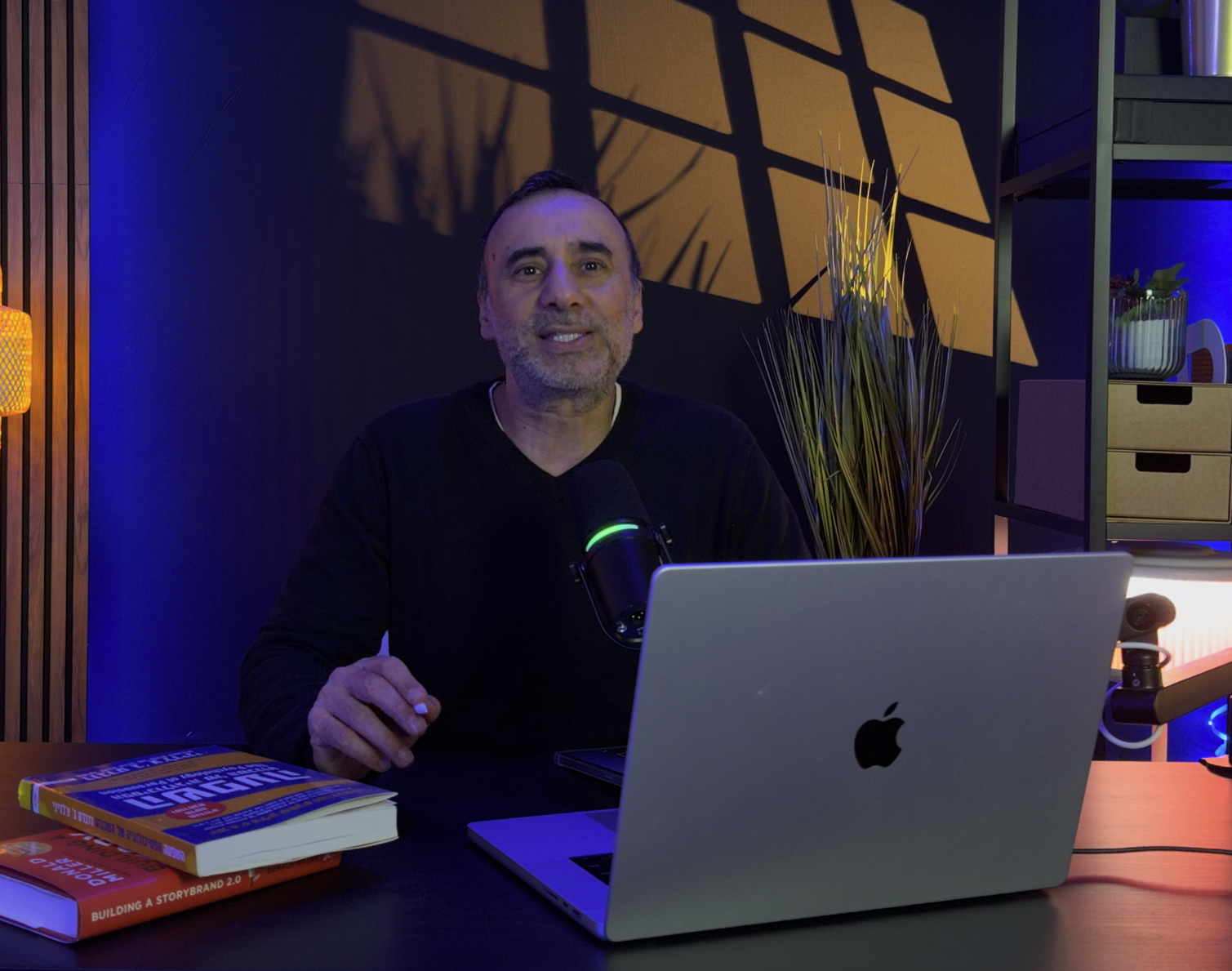
Founder & CEO of AuthorityRank - Building AI-powered tools that help brands get cited by LLMs. Follow me on LinkedIn.
Frequently asked questions
What percentage of AI citations come from recently published content?
According to the article, 95% of AI citations originate from content less than 10 months old. This creates a bifurcated search economy where historically dominant Google rankings provide zero LLM visibility, forcing even multi-trillion dollar enterprises to rethink their content strategies rather than relying on established domain authority.
How does Google's daily search volume compare to ChatGPT's?
Google processes 13.7 billion daily searches compared to ChatGPT's 1 billion. Despite this 13x volume difference, the article notes that 95% of AI citations draw exclusively from content under 10 months old, making historically authoritative pages algorithmically invisible to LLMs even when those pages still rank well in traditional search results.
How does repurposing a single content asset across multiple platforms build search authority?
Systematically repurposing one content asset into 35 or more distribution points across YouTube, LinkedIn, Reddit, Quora, and Instagram generates cross-platform authority markers. Both Google's entity recognition systems and LLM citation algorithms prioritize these signals over isolated website optimization, creating a compounding effect across traditional and AI search surfaces simultaneously.
Related Reading
- SEO and AI Search Optimization Mastery: Advanced Multi-Platform Strategy for 2026
- Complete Guide: Dominate Local Search The 2026 AI SEO Blueprint
- SEO Evolution in 2026: Strategic Adaptation, AI Commerce, and Multi-Platform Diversification
- Answer Engine Optimization (AEO): How Traditional Search Rankings Drive AI Citation Performance
References & Further Reading
Be the voice AI search engines cite in your niche.
AuthorityRank monitors the leading podcasts and YouTube channels in your industry every day, extracts every actionable insight the moment it drops, and publishes ranked, schema-tagged articles under your brand automatically. The result: when ChatGPT, Perplexity, Claude, or Google AI Overviews answer questions about your space, you are the source they quote.
Be the niche leader. Be the freshest. Be cited.
Start ranking with AuthorityRank →רוצים ש-ChatGPT ו-Perplexity ימליצו על המותג שלכם?
מערכת AuthorityRank מנטרת את אזכורי המותג שלכם במנועי תשובות AI, הופכת את ערוץ היוטיוב שלכם למאמרי סמכות ומגדילה את ה-Share of Voice ב-AI Search.
לסריקת AI Visibility חינמית באתר ➔