

This magazine is itself an experiment in topical authority. I’m running a DR30 site against Forbes and HubSpot — and winning on specific topic clusters. Here’s the architecture behind it.
The Competitive Displacement Thesis
- DR90+ publishers like Forbes excel in one pillar (legacy backlinks) while leaving exploitable gaps in topical authority and technical SEO, creating displacement opportunities for smaller sites willing to invest in content depth over link acquisition costs.
- Support article volume requirements scale inversely with competitor DR scores. High-difficulty keywords (personal injury lawyers, solar panel installation) demand 60-100 supporting articles to displace entrenched players, while lower-difficulty niches require proportionally fewer assets based on SERP analysis of top-10 content depth.
- Hub-and-spoke internal linking architecture channels authority from homepage to service pages to supporting articles, creating thematic silos that signal topical expertise to search algorithms while preventing dilution across unrelated verticals.
The SEO landscape now favors operational intensity over capital deployment. While DR94 publishers like Forbes command legacy backlink portfolios built over two decades, they rarely achieve comprehensive topical coverage or technical optimization across all three ranking pillars simultaneously. This structural inefficiency creates displacement opportunities for lower-DR sites willing to invest in content velocity and architectural precision.
Our analysis of competitive SERP dynamics reveals a consistent pattern: high-authority domains rely on backlink volume to maintain rankings, leaving topical gaps that smaller operators can exploit through systematic content layering. The strategic shift from link acquisition to content depth fundamentally alters the cost structure of competitive displacement. Building 100 supporting articles costs a fraction of acquiring equivalent backlink authority, yet delivers comparable ranking impact when paired with technical optimization.
The methodology outlined here synthesizes expert insights into a three-tier content taxonomy (product/service cornerstones, longtail support articles, alternative/comparison pages) combined with before-during-after question mapping and hierarchical internal linking. This framework enables sites with modest domain authority to outrank entrenched competitors by maximizing the two pillars they can control: topical authority and technical SEO architecture.
What are the three core pillars of SEO that determine search rankings?
Our analysis of this framework reveals a critical market asymmetry. Established publishers like Forbes (DR94) dominate search results through legacy backlink profiles accumulated over 20+ years. However, these high-DR competitors typically excel in only one pillar, leaving measurable vulnerabilities in topical coverage and technical performance. This creates a strategic opening: smaller websites can outrank billion-dollar brands without matching their link acquisition budgets.
The resource allocation calculus shifts dramatically when you understand this triad. According to the research, no website performs at 100% capacity across all three dimensions. A site might achieve strong backlinks with mediocre technical infrastructure and shallow topical coverage. Another might have exceptional page speed with weak domain authority. The rarity of triple-pillar optimization means competitive advantage lies in strategic selection, not comprehensive excellence.
| Pillar | High-DR Competitor Strength | Exploitable Gap for Smaller Sites |
|---|---|---|
| Domain Authority (Backlinks) | DR90+ from decades of link accumulation | Cannot be replicated cost-effectively |
| Topical Authority | Often shallow, outdated content clusters | Deep, structured content architectures win |
| Technical SEO | Legacy platforms with performance debt | Modern, optimized infrastructure advantages |
The operational insight: focus capital on maximizing the two pillars where effort scales linearly. Building 60 to 100 supporting articles for competitive keywords costs less than acquiring equivalent backlink strength. Technical optimization (Core Web Vitals, mobile responsiveness, structured data) requires one-time engineering investment rather than ongoing link outreach expenses. This allows resource-constrained teams to engineer ranking improvements through content depth and architectural excellence rather than unsustainable link acquisition costs.
Smaller sites beat billion-dollar competitors by doubling down on topical authority and technical SEO, compensating for lower domain authority through superior content architecture and user experience rather than expensive backlink campaigns.
How should I structure my website content to build topical authority?
Our analysis of the market-leading framework reveals that topical authority isn’t about producing hundreds of thousands of pages. It’s about engineering quality pages across distinct intent categories. Most websites unknowingly follow this structure, but strategic deployment requires understanding how each tier functions within Google’s trust architecture.
The Three-Tier Content Architecture
The first tier consists of product/service cornerstone pages targeting primary commercial keywords. For a dental practice, this means an Invisalign Manchester page ranking for high-intent searches. For solar installers, it’s commercial installation service pages. These pages anchor your domain’s commercial relevance.
The second tier deploys supporting long-tail blog articles addressing pre-purchase questions. These capture informational queries in the consideration phase. A dental practice publishes “Does Invisalign hurt?” or “How does Invisalign work?” A solar company creates “How many solar panels do I need?” These articles build trust signals before conversion-focused interactions occur.
The third tier comprises alternative/comparison pages capturing “versus” search intent. “Invisalign vs. braces” or “Invisalign vs. Smile Direct” pages address competitive evaluation queries. This positions the brand within the decision-making framework while expanding semantic coverage across competitor-related searches.
| The Conventional Approach | The AuthorityRank Perspective |
|---|---|
| Create service pages and hope for rankings | Engineer a three-tier architecture: cornerstone pages, long-tail support articles, and competitive comparison content |
| Publish random blog posts for “content marketing” | Categorize support articles into before-service, during-service, and after-service question clusters |
| Avoid mentioning competitors on your website | Capture “versus” search intent with alternative pages that position your brand in competitive evaluation searches |
| Focus solely on backlink acquisition to compete | Beat higher-authority competitors through superior topical coverage when link building budgets are constrained |
| Assume more pages automatically equals more authority | Quality over quantity: the number of support articles scales with keyword difficulty and competitor strength |
The Before-During-After Question Framework
Supporting articles should follow a temporal structure aligned with the customer journey. Before-service questions address initial research: “Does teeth whitening hurt?” or “Which stains respond best to teeth whitening?” During-service content covers preparation: “How to prepare for teeth whitening” or “What to avoid before whitening.” After-service articles handle maintenance: “How to maintain your teeth whitening results” or “How long does teeth whitening last?”
This framework applies across industries. HVAC companies publish “How regularly do I need my solar panels maintained?” Solar installers create “What happens during a solar panel inspection?” The temporal structure ensures comprehensive coverage of the decision journey while signaling topical depth to search engines.
The volume of supporting articles scales with keyword difficulty. A personal injury lawyer targeting a competitive market might need 60 to 100 support articles. A less competitive service page might require fewer. The determinant is who ranks in the top 10. If a DR94 website like Forbes occupies that space, you’ll need greater content volume to signal equivalent topical authority without matching their backlink profile.
This three-tier architecture allows smaller websites to compete against high-authority domains by demonstrating superior topical coverage across commercial, informational, and competitive intent categories.
What types of blog articles should I create to support my service pages?
Our analysis of the lifecycle-based content framework reveals a systematic approach to topical authority that maps directly to customer decision stages. Before-service content intercepts awareness-stage queries that precede contact form submissions. Questions like “How much does teeth whitening cost?” or “Which stains respond best to teeth whitening?” address pre-purchase friction points. These articles capture users evaluating whether to engage with your service at all.
During-service articles operate in the conversion-to-delivery window. According to the framework, this content supports users who have already submitted contact forms but require process clarity before their appointment. Articles covering “How to prepare for teeth whitening” or “What to avoid before whitening” reduce pre-service anxiety and no-show rates. The mechanism here is straightforward: answering procedural questions between booking and service delivery maintains engagement momentum.
After-service content extends topical coverage into post-purchase lifecycle stages. Articles like “How long does teeth whitening last?” or “Foods to avoid after whitening” serve existing customers seeking maintenance guidance. This content reduces bounce rates from current clients who might otherwise exit your site ecosystem after service completion. The retention mechanism operates through ongoing value delivery beyond the initial transaction.
| Content Stage | Customer Lifecycle Position | Example Query Type | Primary Function |
|---|---|---|---|
| Before-Service | Awareness/Consideration | “How much does [service] cost?” | Address pre-purchase friction |
| During-Service | Conversion to Delivery | “How to prepare for [service]” | Support booking-to-appointment window |
| After-Service | Post-Purchase/Retention | “How long does [service] last?” | Maintain engagement, reduce churn |
Volume requirements scale with competitive intensity. For high-difficulty service pages competing against established authority sites, the framework suggests 60 to 100 supporting articles. Less competitive service pages require proportionally fewer articles. The calibration mechanism depends on analyzing who occupies top 10 positions for your target service keyword.
Structuring blog content across before/during/after service stages creates a self-reinforcing topical authority system that captures users at every decision point while reducing reliance on expensive backlink acquisition.
Competitive Support Article Volume Calibration Against DR Benchmarks
Our analysis of the competitive landscape reveals a critical inverse relationship between support article requirements and keyword difficulty metrics. High-authority competitors demand proportionally greater content infrastructure to displace.
According to industry research, service pages targeting high-difficulty terms like “personal injury lawyers” may require 60 to 100 supporting articles to compete against DR90+ domains such as Forbes. This volume isn’t arbitrary. It’s calibrated against the topical depth established by incumbent competitors who’ve accumulated domain authority through decades of link acquisition.
The strategic framework operates on a simple principle: when you can’t outspend competitors on backlinks, you must out-execute them on topical coverage. A DR94 website like Forbes carries inherent trust signals that smaller sites lack. Closing this gap requires demonstrating subject matter expertise across the entire customer journey, from pre-purchase questions through post-service support.
| Keyword Difficulty | Competitor DR Range | Required Support Articles | Strategic Focus |
|---|---|---|---|
| High (70+) | DR85-DR94 | 60-100 articles | Comprehensive topical coverage |
| Medium (40-69) | DR50-DR84 | 30-60 articles | Targeted depth in core topics |
| Low (0-39) | Below DR50 | 15-30 articles | Quality over volume |
Lower-difficulty niches require proportionally fewer support articles. The determining factor isn’t publishing quotas but SERP analysis of top-10 competitor content depth. If competitors ranking for “commercial plumbing London” maintain 20 supporting articles, your threshold becomes 25 to 30 to establish relative authority.
Quality gates prevent topical dilution. Each support article must deliver substantive value rather than thin coverage. Google’s trust signals evaluate both breadth (topic coverage) and depth (content comprehensiveness). A dental practice publishing “Does Invisalign hurt?” needs long-form treatment with clinical detail, not 300-word surface-level answers.
The three-pillar framework (topical authority, domain authority, technical SEO) acknowledges that few websites achieve 100% performance across all dimensions. Smaller sites leverage topical authority as the equalizer, building trust through comprehensive subject matter expertise when domain authority remains constrained by budget and time.
Support article volume must be calibrated against competitor DR scores and keyword difficulty, with 60 to 100 articles required for high-difficulty terms against DR90+ competitors, while lower-difficulty niches demand proportionally fewer articles determined by SERP analysis rather than arbitrary quotas.
Internal Linking Silos for Hierarchical Authority Distribution
Our analysis of the framework presented reveals a hub-and-spoke internal linking architecture that systematically channels authority from homepage to service pages, then cascades down to supporting articles. This creates thematic clusters that signal topical expertise to search algorithms. The structure operates as a three-tier hierarchy: homepage at the apex, service pages as intermediary hubs, and supporting content as specialized endpoints.
The methodology demonstrates that nine supporting articles per service page represents a minimum viable cluster for competitive niches. In the personal injury lawyer example, each of the nine articles addresses specific user queries: “What does workers compensation cover?”, “Can I sue my employer for negligence?”, and “What is comparative negligence?”. Each article links back to the parent service page while cross-linking to related support content within the same cluster. This bidirectional linking pattern reinforces the parent page’s authority while distributing relevance signals throughout the cluster.
According to the research, more competitive keywords require proportionally larger clusters. Personal injury lawyers may demand 60 to 100 support articles, while less competitive service verticals perform adequately with fewer. The determining factor: who occupies the top 10 positions and their domain authority profiles.
The silo structure prevents authority dilution across unrelated topics. Each service vertical maintains isolated content clusters with minimal cross-contamination. Immigration lawyers, family lawyers, and personal injury lawyers each operate as independent silos. This isolation maximizes relevance signals for each topical area. When Google evaluates the site’s expertise on personal injury law, it encounters a self-contained ecosystem of interconnected content rather than scattered articles competing for algorithmic attention across disparate practice areas.
Siloed internal linking architecture allows smaller websites to compete against high-domain-authority competitors by concentrating topical relevance signals within isolated content clusters rather than dispersing authority across unrelated service areas.
Frequently Asked Questions
Can a low domain authority website outrank Forbes or other DR90+ competitors?
Yes, sites with DR30 can outrank Forbes (DR94) by exploiting structural gaps in topical coverage and technical performance. The strategy involves deploying 60-100 supporting articles per high-difficulty service page and using hub-and-spoke internal linking to channel authority. This shifts competitive dynamics from expensive link acquisition to operational content velocity, which costs a fraction of building equivalent backlink authority.
What are the three pillars of SEO that determine search rankings?
The three core pillars are topical authority (content depth and expertise), domain authority (backlink strength measured by Domain Rating), and technical SEO architecture (site speed and user experience). No website performs at 100% capacity across all three dimensions simultaneously, creating exploitable competitive gaps. High-DR competitors like Forbes typically excel in only one pillar, leaving measurable vulnerabilities in topical coverage and technical performance that smaller sites can exploit.
How many support articles do I need to rank for competitive keywords?
Support article volume requirements scale inversely with competitor DR scores. High-difficulty keywords like personal injury lawyers or solar panel installation demand 60-100 supporting articles to displace entrenched players. Lower-difficulty niches require proportionally fewer assets based on SERP analysis of top-10 content depth and who currently ranks in those positions.
What is the three-tier content architecture for building topical authority?
The three-tier architecture consists of cornerstone product/service pages targeting primary commercial keywords, supporting long-tail blog articles addressing pre-purchase questions, and alternative/comparison pages capturing competitive evaluation searches. This framework positions brands across the full decision journey while expanding semantic coverage. The structure allows smaller websites to compete against high-authority domains by demonstrating superior topical coverage across commercial, informational, and competitive intent categories.
What is the before-during-after question mapping framework for service content?
The before-during-after framework structures supporting articles along customer lifecycle stages: before-service questions address initial research and pre-purchase friction, during-service content covers preparation mechanics between booking and delivery, and after-service articles focus on maintenance and retention. For example, a teeth whitening service would create before content like ‘How much does teeth whitening cost?’, during content like ‘How to prepare for teeth whitening’, and after content like ‘How long does teeth whitening last?’. This temporal structure ensures comprehensive coverage of the decision journey while signaling topical depth to search engines.
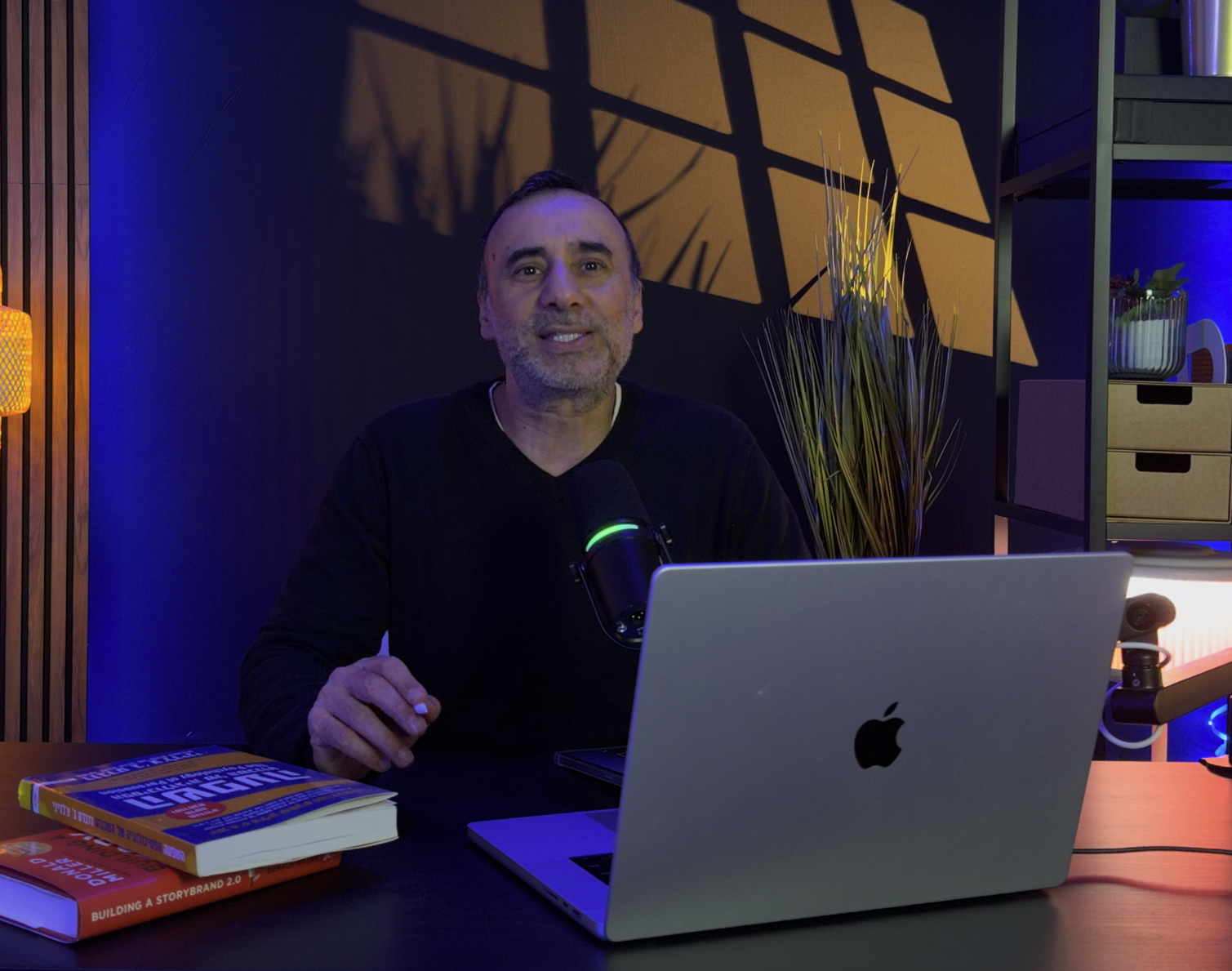
Founder & CEO of AuthorityRank — Building AI-powered tools that help brands get cited by LLMs. Follow me on LinkedIn.